




- 1. CNC Meaning in Manufacturing
- 2. How CNC Machining Turns a Design into a Part
- 3. G-Code and M-Code in Plain English
- 4. CNC Milling vs. CNC Turning
- 5. Why Buyers Consider CNC Machining
- 6. What to Check When Sourcing Magnesium Parts
- 7. Customer Case: AZ31B Needle Plates for an Italian Machinery Company
- 7.1. From the initial quote to a sample order
- 7.2. Production line testing and customer feedback
- 7.3. What this case means for buyers
- 8. Why a Sample Quote Can Differ from a Production Quote
- 9. What to Send with a CNC Machining Inquiry
- 10. Frequently Asked Questions
- 10.1. What does CNC stand for?
- 10.2. Does CNC mean metal machining only?
- 10.3. What is the difference between CNC machining and manual machining?
- 10.4. Can AZ31B magnesium be used for machined parts?
- 10.5. Should I order samples before a larger purchase?
- 10.6. Does the Italian needle plate case prove AZ31B suits every needle plate?
- 11. Discuss Your Magnesium Part with Miji
CNC stands for Computer Numerical Control. It describes how a computer controls a machine’s movements using programmed instructions. In CNC machining, cutting tools remove material from a workpiece to make a part to a specified design.
For buyers, CNC machining offers a practical way to order parts with defined dimensions, holes, pockets, threads, and surface requirements. The result depends on the material, drawing, process planning, and inspection as well as the machine.
At Miji Magnesium, we also see how purchasing decisions develop after the first quote. An Italian textile machinery customer, for example, began with an inquiry for AZ31B sewing machine needle plates, ordered samples, and tested them on a production line before discussing larger future purchases.
That order shows why a useful machining conversation should cover both how a part is made and how the customer will approve it.
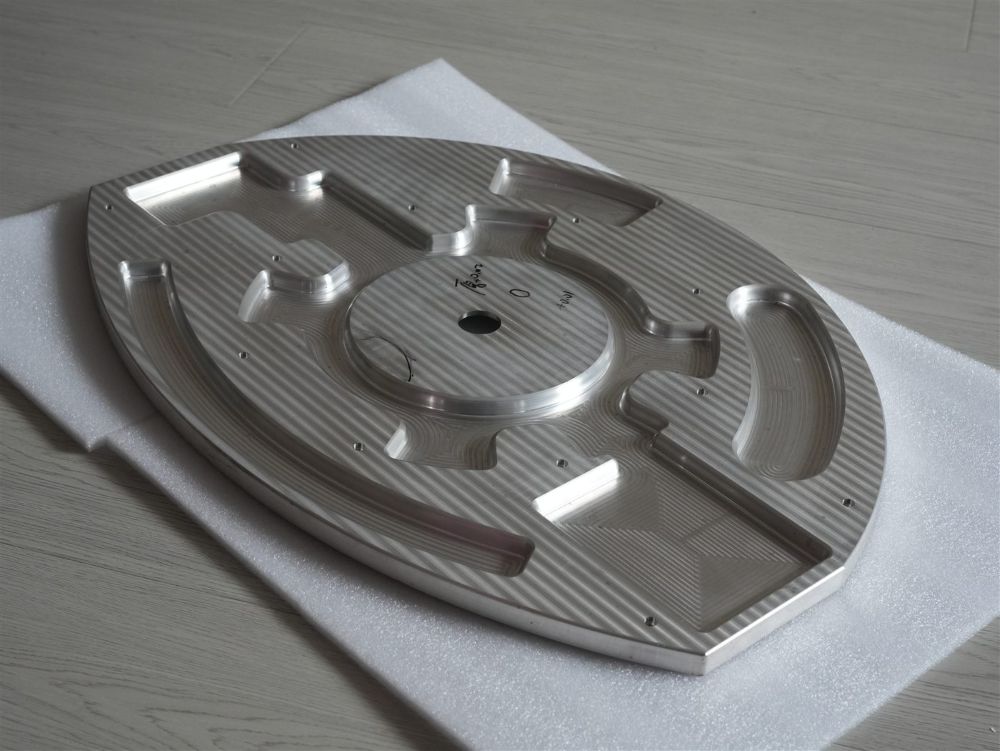
A machined plate from our photo library showing curved pockets, a central bore, and drilled holes. This illustrates part geometry; it is not a photograph of the Italian customer’s needle plates.
CNC Meaning in Manufacturing
A CNC machine follows a program that directs its movement and operating functions. The instructions can control tool position, feed rate, spindle speed, and tool changes.
The term applies to several kinds of equipment. A CNC mill, CNC lathe, and CNC router all use numerical control, but they are designed for different work.
When a supplier offers “CNC machining,” ask which operations your part needs. A round shaft, a flat needle plate, and a deep housing each create different demands on tooling and workholding.
Also separate the control method from the material. CNC describes how equipment is directed. AZ31B, aluminum, steel, and engineering plastics describe what the part is made from.
How CNC Machining Turns a Design into a Part
A typical project starts with a drawing and a 3D model. The model describes the shape, while the drawing specifies requirements such as tolerances, threads, datums, and surface finish.
The programmer uses CAM software to plan tool movements. A post-processor converts those toolpaths into instructions for the selected machine. This CAD-to-CAM-to-NC sequence is described in Autodesk’s CAD/CAM overview.
The shop then prepares the stock, cutting tools, fixtures, and work offsets. During machining, the operator monitors the process and checks the part against the drawing.
| Stage | What happens | What the buyer should clarify |
|---|---|---|
| Design review | The shop checks the model and drawing | Which features control fit and function? |
| Material selection | The required alloy, condition, and stock are identified | Is substitution allowed? |
| Process planning | Tools, setups, and toolpaths are selected | Are any features difficult to access? |
| Machining | Material is removed to create the required geometry | Which dimensions need checks during production? |
| Inspection | The finished part is checked | What report or evidence is required? |
| Application testing | The customer evaluates the part in use | What must the sample demonstrate before a larger order? |
The last step matters for a new application. Dimensional inspection confirms compliance with a drawing; an application test evaluates how the part works in the customer’s equipment.
G-Code and M-Code in Plain English
G-code commonly controls motion, including positioning and cutting paths. M-code commonly controls supporting functions such as starting the spindle, changing tools, or switching coolant on and off.
The exact commands depend on the machine and controller. Buyers normally provide the design and acceptance requirements; the machining supplier prepares and verifies the production program.
CNC Milling vs. CNC Turning
In milling, a rotating cutting tool removes material from the workpiece. It is commonly used for flat surfaces, pockets, slots, profiles, and hole patterns.
In turning, the workpiece rotates while a tool cuts its surface. This suits round features such as shafts, bushings, rings, and cylindrical housings.
Some parts need both. A turned component may also need milled flats or holes that do not lie on its centerline.
| Process | Typical features | Common examples |
|---|---|---|
| CNC milling | Flat faces, pockets, slots, and hole patterns | Plates, brackets, covers, and housings |
| CNC turning | Diameters, shoulders, grooves, and circular bores | Shafts, sleeves, rings, and bushings |
| Combined milling and turning | Round geometry with additional milled features | Custom fittings and complex cylindrical parts |
Axis count is another choice. Three-axis machines move along X, Y, and Z. Five-axis machines add two rotary axes, which can improve access to angled features and reduce repositioning.
More axes do not automatically mean a better quote or a more accurate part. Machine condition, tool access, workholding, and the inspection plan still matter.
Why Buyers Consider CNC Machining
CNC machining can be useful when a project needs precise features, design revisions, or a small initial quantity. Many parts can be produced from standard stock without a dedicated casting mold.
It also supports repeat orders. Once a process is established, the shop can reuse the approved program and setup plan while controlling tool wear and checking dimensions.
There are limits. Very deep pockets, thin walls, small internal corners, and unnecessary tight tolerances can increase cost. A machining review before ordering gives both sides time to resolve these details.
What to Check When Sourcing Magnesium Parts
For a magnesium project, begin with the alloy and the service conditions. Weight targets matter, but so do load, operating temperature, wear, corrosion exposure, and contact with other materials.
If the drawing calls for AZ31B, confirm the required material condition and documentation. Our AZ31B magnesium plate guide provides further background for plate selection.
Stock size also affects the quote. A supplier needs enough material for workholding and machining allowance. Excess stock increases the amount that must be removed.
Thin sections deserve particular attention. Removing material can release residual stress, and clamping can temporarily bend a flexible part. Discuss flatness, critical datums, and the condition in which the finished part will be measured.
For components with sliding or contact surfaces, agree on surface finish and any required protective treatment. Material approval should reflect the actual application.
Magnesium machining also requires appropriate controls for combustible chips and dust. Ask the supplier about its material-specific machining and housekeeping procedures during qualification.

A workshop employee examining plate stock. Agree on material condition and surface requirements before machining.
Customer Case: AZ31B Needle Plates for an Italian Machinery Company
In April 2025, an established textile machinery company in Italy contacted Miji Magnesium about magnesium alloy sewing machine needle plates.
The inquiry specified AZ31B. The customer initially requested pricing for approximately 16 pieces.
From the initial quote to a sample order
We discussed the request with our technical team and provided a quotation.
The customer then considered market competition and other business factors. They decided to start with a small sample order to evaluate quality before making a larger commitment.
We recalculated the price for the revised quantity and sent an updated quote. The customer was satisfied with the price and promptly arranged payment.
Production line testing and customer feedback
After receiving the parts, the customer arranged production line testing. The feedback they shared indicated that the products met their expectations.
The customer expressed an intention to purchase larger quantities annually, depending on market demand. At the time of the case record, cooperation was still developing.
| Case detail | Recorded outcome |
|---|---|
| Customer location | Italy |
| Customer industry | Textile machinery |
| Product | Sewing machine needle plates |
| Specified alloy | AZ31B |
| Initial inquiry | Approximately 16 pieces |
| First purchase | A smaller sample batch |
| Evaluation | Customer production line testing |
| Feedback | Products met the customer’s expectations |
| Next step | Potential annual purchases, subject to demand |
What this case means for buyers
The project illustrates a practical purchasing sequence: clarify the application, obtain a quote, agree on a sample quantity, and evaluate the parts before planning larger purchases.
It also shows why sample pricing should be discussed separately. When the quantity changes, the supplier needs to review the quote against the revised scope.
For a CNC sourcing project, the same approach gives the buyer an opportunity to check fit and function before committing to a production batch. The Italian case documents material supply and customer validation; its record does not specify the machining route.
Why a Sample Quote Can Differ from a Production Quote
A small machining order can still require drawing review, programming, setup, fixtures, and inspection planning. These costs are spread across fewer pieces.
Larger quantities may reduce the setup cost per part. However, total pricing still depends on cycle time, material, tooling, finishing, and inspection requirements.
Ask suppliers to quote the sample stage and expected production quantities separately. Use the same drawing revision and acceptance requirements for each price comparison.
If a design changes after testing, request an updated quote before placing the next order. Even a small change in pocket depth, wall thickness, or surface finish can affect the process.
What to Send with a CNC Machining Inquiry
A useful inquiry explains what the part must do and how you will accept it. Include:
- A 3D model and a PDF drawing, where available.
- The alloy, material condition, and any required certificates.
- Sample quantity and expected production quantities.
- Critical dimensions, datums, tolerances, and threads.
- Surface finish, coating, and cosmetic requirements.
- The inspection report you need with delivery.
- The application and any planned fit or production line tests.
- Requested delivery date and shipping destination.
If a requirement is still open, identify it clearly. For example, you may need help selecting magnesium plate thickness or deciding which surfaces need tighter control.
For an order that starts with samples, agree on the acceptance criteria before production. That makes customer feedback more useful and gives both parties a clear basis for the next order.
Frequently Asked Questions
What does CNC stand for?
CNC stands for Computer Numerical Control. It means a machine follows programmed instructions to control movement and operating functions.
Does CNC mean metal machining only?
No. CNC-controlled equipment can work with metals, plastics, wood, and other materials. The machine, tooling, and process must suit the material.
What is the difference between CNC machining and manual machining?
CNC equipment follows a stored program, while manual machining relies on the operator directly controlling machine movements. The appropriate choice depends on geometry, quantity, and the work required.
Can AZ31B magnesium be used for machined parts?
Yes. Its suitability for a particular part depends on material condition, geometry, loading, surface requirements, and service environment. Confirm these details against the drawing and intended use.
Should I order samples before a larger purchase?
Samples are useful when qualifying a new supplier, material, or design. They allow you to evaluate the agreed requirements and test the part in your equipment before increasing the quantity.
Does the Italian needle plate case prove AZ31B suits every needle plate?
No. It records a positive evaluation for one customer’s application. Other needle plate designs may have different wear, surface, load, or operating requirements and should be assessed separately.
Discuss Your Magnesium Part with Miji
Understanding CNC helps you discuss the manufacturing process. A clear drawing, suitable material, and agreed sample test help turn that discussion into an order you can evaluate.
Our Italian needle plate project followed that progression: an AZ31B inquiry, a revised sample quote, payment, customer testing, and discussions about future purchases.
Explore our magnesium CNC machining services or send us your drawing and quantity requirements. Tell us whether you need a sample batch, material stock, or a quote for repeat production so we can review the right scope.