




- 1. Article Outline
- 2. 1. What Is AZ31B Magnesium Plate?
- 3. 2. Why Engineers Choose AZ31B Magnesium Plate
- 3.1. Weight Reduction Without Starting Over
- 3.2. Good Machinability
- 3.3. Useful Formability
- 3.4. Vibration and Damping Performance
- 4. 3. AZ31B-O vs H24 vs H26: Temper Changes the Material
- 4.1. AZ31B-O
- 4.2. AZ31B-H24
- 4.3. AZ31B-H26
- 4.4. Choose the Temper Around the Process
- 5. 4. What Should You Check Before Buying AZ31B Magnesium Plate?
- 5.1. Start With the Final Part
- 5.2. Thickness Alone Is Not Enough
- 5.3. Think About Machining Allowance
- 6. 5. AZ31B Magnesium Sheet vs AZ31B Magnesium Plate
- 6.1. Choose Sheet When Forming Is the Main Job
- 6.2. Choose Plate When Machining or Structural Thickness Matters
- 7. 6. AZ31B Plate vs AZ31 Tooling Plate
- 8. 7. CNC Machining AZ31B Magnesium Plate
- 8.1. Workholding Still Matters
- 8.2. Flatness Matters Before the First Cut
- 8.3. Chip Management Is Part of the Process
- 9. 8. Where AZ31B Magnesium Plate Makes Sense
- 9.1. Aerospace and UAV Components
- 9.2. Electronics and Equipment Housings
- 9.3. Automotive and Transportation
- 9.4. Industrial Jigs and Fixtures
- 10. 9. Standards Matter More Than Marketing Names
- 11. 10. Quality Is More Than Checking Chemical Composition
- 11.1. Dimensional Inspection
- 11.2. Surface Condition
- 11.3. Mechanical Performance
- 11.4. Material Documentation
- 12. 11. What Should You Send When Requesting an AZ31B Plate Quote?
- 13. 12. How Miji Approaches AZ31B Magnesium Plate Projects
- 14. 13. Frequently Asked Questions About AZ31B Magnesium Plate
- 14.1. Is AZ31B magnesium plate good for CNC machining?
- 14.2. What is AZ31B-H24?
- 14.3. What is the difference between AZ31B-H24 and H26?
- 14.4. Is AZ31B sheet the same as AZ31B plate?
- 14.5. Is AZ31B tooling plate the same as regular AZ31B plate?
- 14.6. Can AZ31B magnesium plate be custom cut?
- 14.7. Can AZ31B plate be supplied as finished CNC parts?
- 14.8. What information should I provide when buying AZ31B magnesium plate?
- 15. Conclusion: Buy AZ31B Plate for the Part, Not Just the Specification
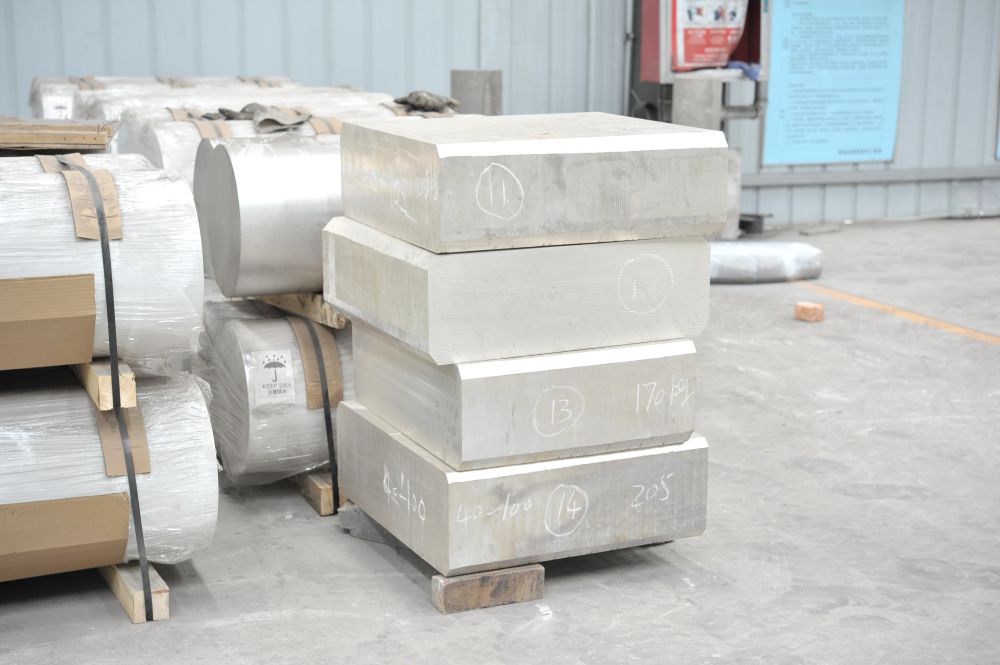
AZ31B magnesium plate is often chosen for one simple reason: it helps reduce weight without forcing engineers to give up practical manufacturability.
That sounds straightforward, but buying the right AZ31B plate is not as simple as putting “AZ31B” on a purchase order.
Temper matters. Plate thickness matters. Flatness matters. The final machining process matters. Even two pieces of material carrying the same alloy designation may behave differently if they were supplied in different conditions or produced for different applications.
For engineers, buyers, and product teams, the better question is not just:
“Is AZ31B a good magnesium alloy?”
It is:
“Is this particular AZ31B magnesium plate right for the part we are trying to make?”
This guide focuses on that decision.
Article Outline
- What AZ31B magnesium plate is
- Why engineers choose AZ31B
- AZ31B-O, H24, and H26 explained
- What to check before buying AZ31B plate
- AZ31B sheet vs plate
- AZ31B plate vs tooling plate
- CNC machining AZ31B magnesium plate
- Common applications
- Quality and inspection considerations
- What information to send a supplier
- Common AZ31B magnesium plate questions
1. What Is AZ31B Magnesium Plate?
AZ31B is a wrought magnesium alloy based mainly on magnesium with aluminum, zinc, and manganese as important alloying elements.
It has been used for years in applications where weight reduction, machinability, forming performance, and practical manufacturing all matter.
That is an important distinction.
There are magnesium alloys with higher strength. There are also alloys designed for more demanding temperature or aerospace environments. AZ31B remains popular because it offers a useful middle ground.
It can work well for rolled sheet and plate, formed components, CNC-machined parts, housings, brackets, tooling, and other lightweight structures.
For many projects, that balance matters more than chasing the highest possible number on a material data sheet.
An engineer may choose AZ31B because the part needs to be lighter.
A manufacturer may prefer it because it machines cleanly.
A product team may select it because a thinner, lighter enclosure improves the finished product.
A buyer may choose it because the alloy is more commercially accessible than some specialized magnesium grades.
That is why AZ31B continues to show up across aerospace, electronics, transportation, industrial equipment, and precision manufacturing.
2. Why Engineers Choose AZ31B Magnesium Plate
Weight Reduction Without Starting Over
The obvious advantage of magnesium is weight.
But in real projects, reducing weight is only useful if the material can still be processed into the required part.
AZ31B works well here because engineers can approach it using familiar manufacturing methods such as rolling, cutting, forming, drilling, milling, and other CNC operations.
This makes it attractive when a team wants to remove weight from a component without completely changing how that component is manufactured.
For example, an aluminum housing may already have an established CNC process. If weight becomes a major design target, AZ31B may be evaluated because a similar machined geometry could potentially be produced at a lower material weight.
The decision still requires engineering validation, but the manufacturing path is easier to understand than with many nonmetal alternatives.
Good Machinability
AZ31B is generally regarded as a very machinable structural metal.
That matters when plate is only the starting material.
Many buyers are not actually purchasing a plate because they need a rectangular piece of magnesium. They are purchasing raw stock that will later become:
- an enclosure
- a mounting bracket
- a structural frame
- a fixture
- a thin-wall component
- a prototype
- a machined housing
In those cases, machining behavior becomes part of the material decision.
Good machinability can help reduce unnecessary machining difficulty, but it does not eliminate the need for proper tooling, chip control, workholding, and process planning.
Useful Formability
AZ31B is also available in conditions that support forming applications.
This is one reason the temper should never be treated as a small detail on the purchase order.
A plate intended for CNC machining and a sheet intended for forming may require very different material conditions even though both are called AZ31B.
Vibration and Damping Performance
Magnesium alloys are also valued in products where vibration behavior matters.
That can be useful in electronics, industrial equipment, transportation systems, and certain precision components.
This does not mean AZ31B automatically solves a vibration problem. Geometry, thickness, mounting method, and overall assembly design still matter.
But damping is one reason engineers may evaluate magnesium instead of looking only at aluminum or steel.
3. AZ31B-O vs H24 vs H26: Temper Changes the Material
One of the most common purchasing mistakes is treating every AZ31B plate as interchangeable.
It is not.
The temper tells you something about the condition of the material and how it has been processed.
AZ31B-O
The O condition is annealed.
In practical terms, this condition is generally considered when ductility and forming performance are more important than maximizing strength.
If a component requires significant forming, bending, or shaping, engineers may evaluate an annealed condition before choosing a harder temper.
AZ31B-H24
H24 is a strain-hardened and partially annealed condition.
It is widely associated with a balance between mechanical strength and workable formability.
This balance is one reason H24 frequently appears in sheet and plate requirements.
For many engineering applications, the question is not whether H24 is “better” than O.
The question is whether its balance of strength and formability better matches the manufacturing process.
AZ31B-H26
H26 represents a higher level of strain hardening.
It may be considered when higher strength is more important and the part does not require the same level of forming capability.
Again, this is not automatically an upgrade from H24.
A stronger temper can be the wrong choice if the production process requires forming behavior that the material condition does not support well.
Choose the Temper Around the Process
A simple selection approach looks like this:
Need more forming flexibility?
Start by evaluating a more ductile condition.
Need a balance between strength and formability?
H24 may be worth considering.
Need greater strength with less forming demand?
H26 may be appropriate.
The final choice should always be checked against the drawing, applicable material standard, thickness, manufacturing process, and mechanical property requirements.
4. What Should You Check Before Buying AZ31B Magnesium Plate?
This is where a good purchase order becomes more valuable than a long material description.
Start With the Final Part
Do not begin with the plate.
Begin with what the plate needs to become.
Ask:
- Will the material be CNC machined?
- Will it be bent or formed?
- Is the finished component thin-walled?
- Is flatness critical?
- Will large amounts of material be removed?
- Is the component structural or mainly a housing?
- Does the customer drawing call out a specific AMS or ASTM requirement?
- Is traceability required?
- Will the part receive a coating or other surface treatment?
These questions quickly narrow the material requirement.
Thickness Alone Is Not Enough
Buyers often send thickness, width, and length and assume that is enough to quote the job.
For basic stock, it may be.
For precision work, it often is not.
Flatness can matter just as much as thickness.
A plate may meet the nominal thickness requirement but still create additional setup or machining work if the incoming material does not provide the flatness needed for the final component.
This becomes especially important with:
- large plates
- thin-wall machining
- precision housings
- fixtures
- components machined on both sides
Think About Machining Allowance
If a finished part must hold a tight dimension, ordering raw plate exactly at that finished size may create unnecessary production risk.
The manufacturer may need machining allowance for surfacing, squaring, or final finishing.
A better RFQ explains the final part requirement rather than forcing the supplier to guess.
5. AZ31B Magnesium Sheet vs AZ31B Magnesium Plate
“Sheet” and “plate” are sometimes used loosely in everyday purchasing conversations.
That can create confusion.
The alloy may still be AZ31B, but the expected thickness range, temper, manufacturing route, tolerance, and end use can be different.
Choose Sheet When Forming Is the Main Job
AZ31B sheet is commonly considered when the material will be formed, bent, stamped, or used for relatively thin structures.
Electronics housings and lightweight panels are examples where sheet may make sense.
Choose Plate When Machining or Structural Thickness Matters
Plate becomes more relevant when the part requires additional thickness, structural stiffness, machining stock, or a larger amount of material removal.
A CNC-machined housing, tooling component, bracket, or structural part may start from plate rather than thin sheet.
Do not decide only by the name.
Look at the drawing and ask what the material must do during manufacturing.
6. AZ31B Plate vs AZ31 Tooling Plate
This is another area where buyers can get caught by similar terminology.
AZ31B rolled plate and magnesium tooling plate may both appear in searches for AZ31 magnesium material, but they should not automatically be treated as the same product.
A tooling application puts heavy emphasis on dimensional stability and machinability.
Typical examples include:
- jigs
- checking fixtures
- assembly fixtures
- inspection equipment
- tooling structures
- prototype tooling
A structural AZ31B plate application may place greater emphasis on specified mechanical properties, temper, forming behavior, or compliance with a particular material standard.
If the real need is a large machined fixture, tell the supplier.
If the material will become a formed aerospace component, tell the supplier.
Those are different purchasing conversations.
The material should be selected around the job rather than around a keyword found on a website.
7. CNC Machining AZ31B Magnesium Plate
AZ31B can be an excellent starting point for CNC-machined lightweight parts.
But “easy to machine” should never be confused with “nothing can go wrong.”
Workholding Still Matters
Magnesium’s low weight is helpful in the finished part, but thin sections can still move under clamping pressure.
If a component has thin walls, large pockets, or a high material-removal ratio, the machining strategy needs to control distortion throughout the process.
Good workholding supports the part without simply squeezing it harder.
Flatness Matters Before the First Cut
For precision plate machining, incoming stock condition affects setup.
Better control at the material stage can reduce unnecessary facing operations and make final dimensional control easier.
This is why experienced buyers often discuss flatness and machining allowance before the order is placed.
Chip Management Is Part of the Process
Magnesium machining also requires proper control of chips, fine particles, heat, and housekeeping.
A professional machining process should account for these factors from the beginning rather than treating them as an afterthought.
For a deeper technical discussion of magnesium machining, engineers can also review Miji Magnesium’s broader material and machining resources on mijimg.com, including guidance focused on safe machining of AZ31B magnesium plate.
The important point for buyers is simple:
If you need a finished magnesium component, choose a supplier based not only on whether it can sell AZ31B stock, but also on whether it understands what happens to that stock during manufacturing.
8. Where AZ31B Magnesium Plate Makes Sense
AZ31B is used across many industries, but simply listing industries does not help an engineer make a decision.
It is more useful to look at the type of problem being solved.
Aerospace and UAV Components
Weight is always under pressure in aerospace and unmanned systems.
AZ31B can be considered for lightweight housings, brackets, interior structures, tooling, fixtures, and other components where the alloy’s weight and machinability fit the design requirements.
For critical aerospace applications, however, purchasing should be driven by the drawing, required specification, inspection level, and traceability requirements.
“Aircraft use” alone is not enough to define the material.
Electronics and Equipment Housings
Portable electronics and industrial equipment often need a structure that is light but still rigid enough to protect internal components.
Magnesium can also be useful where enclosure design, vibration behavior, heat management, and shielding considerations are part of the product architecture.
This is one reason AZ31B has remained relevant in laptop housings, equipment covers, frames, and other lightweight enclosure applications.
Automotive and Transportation
Reducing component weight can support broader vehicle weight targets.
AZ31B may be considered for lightweight panels, housings, brackets, prototypes, fixtures, and other components where the design and production route suit wrought magnesium.
Industrial Jigs and Fixtures
This is an application buyers sometimes overlook.
A fixture that needs to be moved repeatedly by operators benefits from lower weight.
A large inspection fixture or assembly tool can become much easier to handle when unnecessary mass is removed.
For this type of application, dimensional stability and machining requirements may matter more than forming performance.
9. Standards Matter More Than Marketing Names
A supplier can call a product “high-quality AZ31B.”
That phrase does not tell an engineer very much.
The useful questions are:
- What material specification applies?
- What temper is supplied?
- What product form does the specification cover?
- What mechanical property requirements apply?
- What documentation accompanies the material?
- Is lot or batch traceability required?
AZ31B may appear under different ASTM and AMS specifications depending on product form and condition.
Common references associated with AZ31B material include ASTM B90/B90M and several AMS specifications used for different sheet and plate conditions.
Do not choose a standard just because it appears in a supplier catalog.
Use the specification required by the drawing, customer, industry, or engineering design.
If no standard is specified, discuss the actual application with the material supplier before placing the order.
That short conversation can prevent a much more expensive problem later in production.
10. Quality Is More Than Checking Chemical Composition
Material chemistry is important, but a good AZ31B plate order usually requires more than confirming that the alloy name is correct.
Depending on the application, buyers may also need to consider:
Dimensional Inspection
Thickness, width, length, and flatness should match the requirement agreed on before production.
Surface Condition
Scratches, oxidation, handling marks, and other surface conditions can matter if the material will be used directly, machined lightly, coated, or turned into a cosmetic component.
Mechanical Performance
Where mechanical properties are specified, the requirement should be tied to the relevant material condition and standard.
Material Documentation
Commercial and technical documents can help confirm what was actually supplied.
Miji Magnesium works with magnesium alloy materials including AZ31B and supports plate, sheet, bar, tube, extrusion, forging, rolling, and CNC-related requirements.
For projects where AZ31B plate is only the first step toward a finished component, discussing both the raw material and downstream process early can help reduce unnecessary handoffs later.
11. What Should You Send When Requesting an AZ31B Plate Quote?
A useful RFQ does not need to be long.
It needs to be clear.
Include the following information whenever possible:
- Alloy: AZ31B
- Required temper
- Plate or sheet
- Thickness
- Width
- Length
- Quantity
- Required material standard
- Flatness requirement
- Dimensional tolerance
- Surface requirement
- Inspection requirement
- Certification or traceability requirement
- Whether custom cutting is needed
- Whether CNC machining is needed
- Final application
- Drawing, if available
A drawing is especially useful when the plate will become a finished machined component.
It allows the supplier to evaluate whether the requested raw material size makes sense for the final geometry.
That is much more useful than simply asking:
“What is your price for AZ31B plate?”
The cheapest raw plate is not always the lowest-cost route to a finished part.
12. How Miji Approaches AZ31B Magnesium Plate Projects
At Miji Magnesium, we treat AZ31B plate as an engineering material rather than just another stock item.
Some customers only need raw plate.
Others need custom dimensions.
Some need material that will be heavily machined.
Others are developing lightweight enclosures, aerospace structures, electronic housings, fixtures, or prototype components.
Those projects should not all receive the same recommendation.
The first step is understanding the application.
From there, the discussion can move to:
- alloy condition
- product form
- plate size
- manufacturing route
- machining needs
- inspection
- documentation
- packaging
- downstream processing
Miji Magnesium also maintains broader technical content through mijimg.com, where engineers and buyers can find additional information on magnesium alloys, CNC machining, forming, material comparison, and manufacturing challenges.
That technical background matters because selecting magnesium is rarely just a purchasing decision.
It is usually a design and manufacturing decision at the same time.
13. Frequently Asked Questions About AZ31B Magnesium Plate
Is AZ31B magnesium plate good for CNC machining?
Yes. AZ31B is generally considered highly machinable and is widely used for machined lightweight components. Good results still depend on appropriate tooling, workholding, chip management, and part geometry.
What is AZ31B-H24?
AZ31B-H24 is a strain-hardened and partially annealed condition. It is commonly selected when engineers need a practical balance between strength and formability.
What is the difference between AZ31B-H24 and H26?
H26 generally represents a higher level of strain hardening than H24. This can provide greater strength, but it may reduce forming flexibility. The correct choice depends on the part and manufacturing process.
Is AZ31B sheet the same as AZ31B plate?
They use the same alloy family, but sheet and plate can differ in thickness, supplied condition, applicable specifications, manufacturing expectations, and typical end use. Always purchase according to the drawing and actual application.
Is AZ31B tooling plate the same as regular AZ31B plate?
Not necessarily. Tooling plate is selected with machining and dimensional stability in mind, while standard rolled AZ31B plate may be purchased for structural, forming, or specification-driven applications.
Can AZ31B magnesium plate be custom cut?
Yes, custom cutting is commonly used when standard stock dimensions would create unnecessary material waste or machining time. The required tolerance should be discussed before ordering.
Can AZ31B plate be supplied as finished CNC parts?
Yes. When a project requires more than raw material, AZ31B plate can be used as stock for CNC-machined components. Providing a drawing helps the supplier evaluate material size, machining allowance, geometry, and tolerance requirements.
What information should I provide when buying AZ31B magnesium plate?
At minimum, provide the alloy, temper, thickness, width, length, quantity, and final application. Add the applicable standard, tolerance, flatness, inspection, certification, and machining requirements when they matter to the project.
Conclusion: Buy AZ31B Plate for the Part, Not Just the Specification
AZ31B magnesium plate is a practical lightweight material, but the alloy name is only the beginning of the decision.
The better purchasing process starts with the finished component.
Think about forming.
Think about machining.
Think about flatness.
Think about material condition.
Think about the specification the customer actually requires.
And think about what will happen to the plate after it arrives at the factory.
That approach makes it much easier to choose between AZ31B-O, H24, H26, sheet, plate, tooling stock, or a custom-machined solution.
If your project requires AZ31B magnesium plate, custom dimensions, or finished magnesium components, send Miji Magnesium your material requirement or drawing. The team can review the application and help determine a practical material and manufacturing route before production begins.