




- 1. What Is CNC Machining?
- 2. How Does a CNC Machine Work?
- 2.1. 1. Create the part design
- 2.2. 2. Plan the machining process
- 2.3. 3. Convert toolpaths into machine instructions
- 2.4. 4. Set up the machine
- 2.5. 5. Run and monitor the program
- 2.6. 6. Inspect the finished part
- 3. What Are G-Code and M-Code?
- 4. Common Types of CNC Machines
- 5. What Is the Difference Between 3-Axis and 5-Axis CNC Machining?
- 6. Main Advantages of CNC Machining
- 6.1. Repeatable production
- 6.2. Complex part geometry
- 6.3. Flexible production quantities
- 6.4. Controlled revisions
- 6.5. Broad material choice
- 7. CNC Machining Limitations Buyers Should Know
- 7.1. Tight tolerances increase cost
- 7.2. Sharp internal corners are difficult
- 7.3. Deep pockets and thin walls need care
- 7.4. Every new setup adds risk
- 7.5. The drawing still matters
- 8. What Determines CNC Machining Cost?
- 9. CNC Machining vs. Manual Machining
- 10. Can Magnesium Be CNC Machined?
- 11. How to Choose a CNC Machining Supplier
- 12. What Should You Include in a CNC Machining RFQ?
- 13. Frequently Asked Questions
- 13.1. What does CNC stand for?
- 13.2. Is CNC a machine or a process?
- 13.3. What is the difference between CNC machining and 3D printing?
- 13.4. Is a 5-axis CNC machine always more accurate?
- 13.5. Can CNC machines cut materials other than metal?
- 13.6. Is magnesium difficult to machine?
- 13.7. What files are needed for a CNC quote?
- 14. Final Takeaway
CNC means Computer Numerical Control. In simple terms, a computer directs a machine tool to move, cut, drill, turn, or shape a part according to programmed instructions.
For a buyer, the important point is not the acronym. CNC machining makes it possible to produce complex parts repeatedly while controlling dimensions, surface finish, and inspection requirements.
However, a CNC machine does not guarantee a good part by itself. Material selection, part design, tooling, fixturing, programming, and inspection all affect the result.
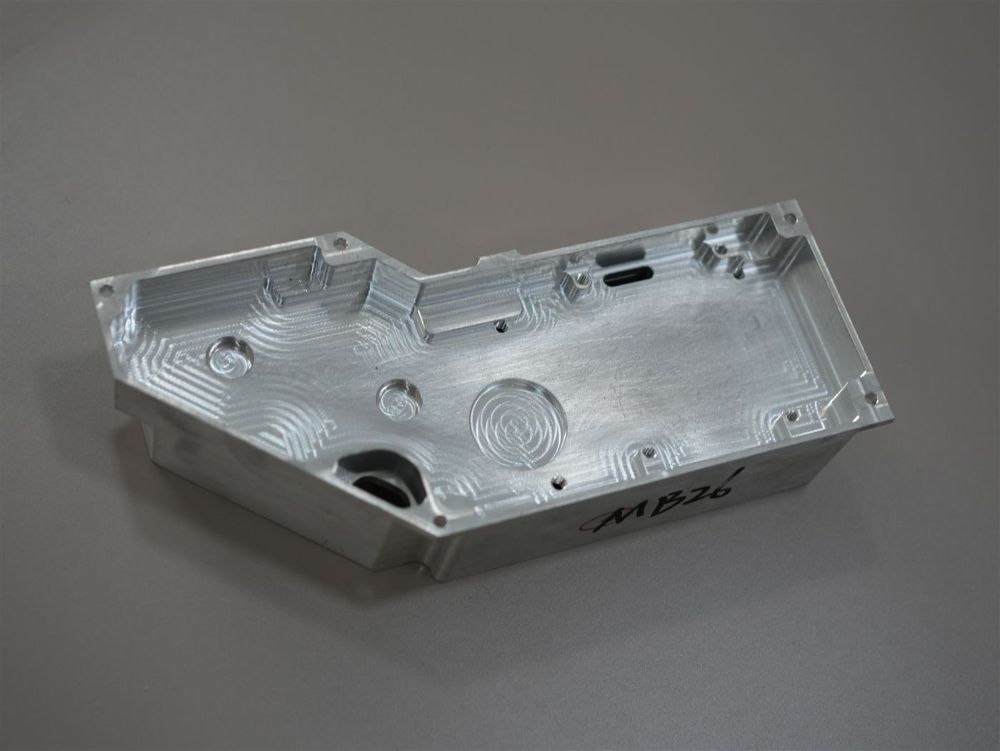
A machined magnesium component with pockets, holes, and visible toolpaths.
What Is CNC Machining?
CNC machining is a manufacturing process in which programmed equipment removes material from a workpiece to create the required shape.
The workpiece may be metal, plastic, composite, wood, or another machinable material. Common operations include milling, turning, drilling, boring, threading, and contouring.
The machine follows coordinates and commands created from the part design. These commands control movements such as:
- Where the cutting tool moves
- How fast the tool travels
- How fast the spindle rotates
- When a tool change occurs
- When coolant or other machine functions turn on and off
CNC describes the control method. It does not describe one specific machine, material, or level of quality.
How Does a CNC Machine Work?
Most CNC projects follow the same basic path from design to finished part.
1. Create the part design
The process normally begins with a 2D drawing, a 3D CAD model, or both.
The drawing communicates dimensions, tolerances, threads, surface finish, and inspection points. The 3D model defines the part geometry.
2. Plan the machining process
A programmer or manufacturing engineer decides how to make the part.
This includes the machine type, stock size, workholding method, cutting tools, setup sequence, and inspection plan. CAM software is often used to create toolpaths from the CAD model.
3. Convert toolpaths into machine instructions
The CAM toolpaths are converted into code that the selected machine can read. This step is often called post-processing.
Different machines may require different post-processors, even when they are making the same part.
4. Set up the machine
The operator loads the material, installs the required tools, secures the workpiece, and sets the work coordinates.
Good fixturing matters. A part that moves, bends, or vibrates during machining may not meet the drawing.
5. Run and monitor the program
The machine follows the programmed toolpath. The operator still checks tool condition, chip control, workholding, and process stability.
For a new or complex job, the shop may use simulation, a dry run, or a controlled first-piece process before full production.
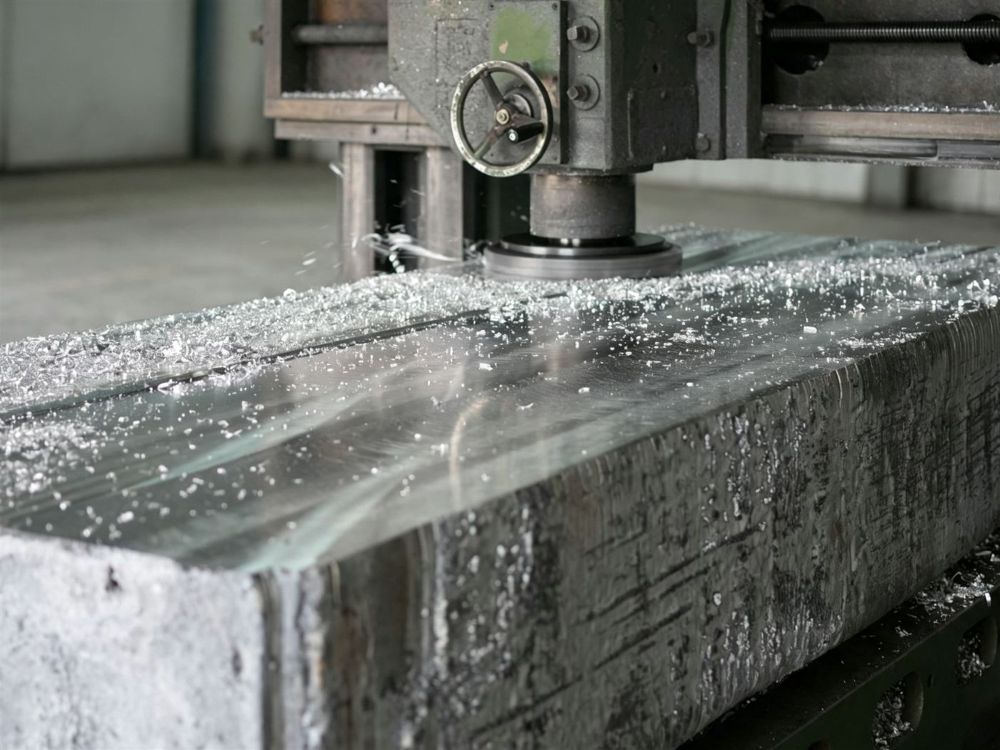
A magnesium plate during a milling operation at Miji Magnesium.
6. Inspect the finished part
Inspection may use calipers, micrometers, gauges, height measurement, optical equipment, or a coordinate measuring machine.
The correct inspection method depends on the tolerance, geometry, quantity, and customer requirements.
What Are G-Code and M-Code?
G-code is the common name for commands that control machine motion and machining cycles. It can tell the machine where to move, how to move, and which path to follow.
M-code is commonly used for supporting machine functions. Examples include spindle control, coolant control, and program stops.
In real production, programmers do not always write every line by hand. CAM software can generate much of the program, but the shop still needs to verify that the code, tools, offsets, and setup are correct.
Common Types of CNC Machines
The right machine depends on the part shape, tolerance, quantity, and required operations.
| CNC machine type | Typical work | Best suited for |
|---|---|---|
| CNC milling machine | Cuts a stationary workpiece with rotating tools | Plates, housings, brackets, pockets, holes, and contoured parts |
| CNC lathe or turning center | Rotates the workpiece against a cutting tool | Shafts, bushings, pins, rings, and other round parts |
| Mill-turn machine | Combines turning and milling operations | Complex round parts that also need flats, holes, or milled features |
| 3-axis machining center | Moves along the X, Y, and Z axes | Many common prismatic parts and machined plates |
| 4-axis machining center | Adds controlled rotation around one axis | Parts that need machining on several sides with fewer setups |
| 5-axis machining center | Controls three linear axes and two rotary axes | Complex surfaces, angled features, and parts that benefit from fewer setups |
| CNC router | Uses high-speed cutting for larger or lighter-duty work | Plastics, wood, composites, foam, and some nonferrous materials |
| CNC grinding machine | Uses an abrasive wheel for precision finishing | Hardened parts, tight size control, and fine finished surfaces |
Wire EDM, sinker EDM, laser cutting, waterjet cutting, and plasma cutting can also use CNC control. They use different material-removal methods than conventional milling or turning.
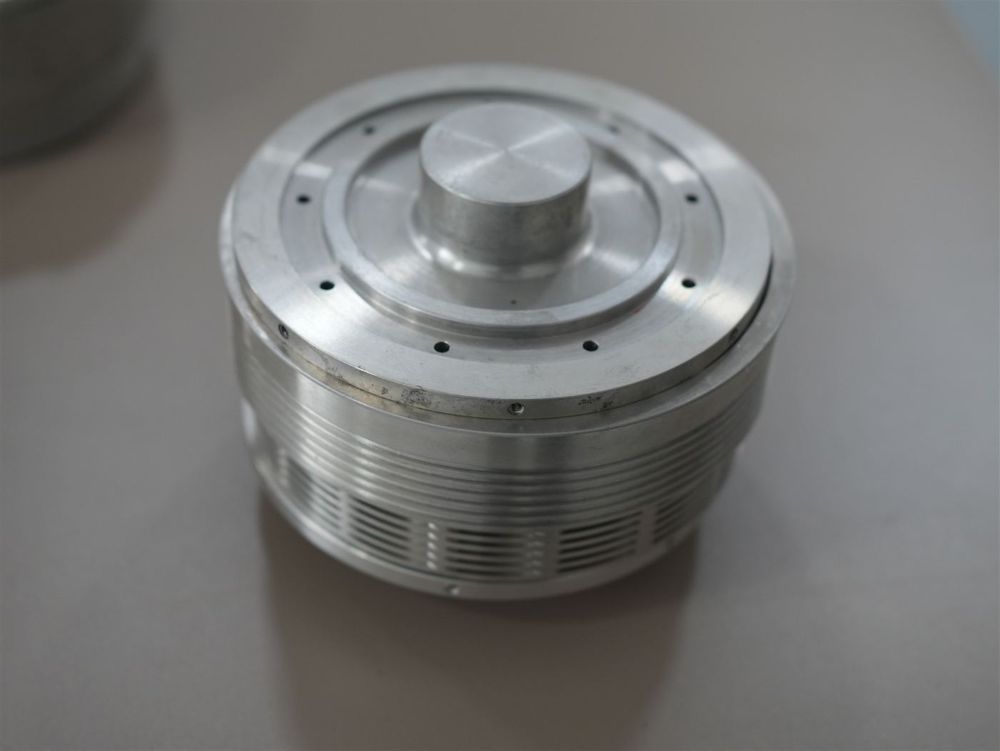
A turned magnesium component with circular features and drilled holes.
What Is the Difference Between 3-Axis and 5-Axis CNC Machining?
A 3-axis machine moves the cutting tool along the X, Y, and Z directions. It is a practical choice for many plates, brackets, covers, and housings.
A 5-axis machine adds two rotary movements. This allows the tool to approach the part from more directions.
Five-axis machining can reduce setups and improve access to angled or complex features. It is not automatically the best choice for every part. A straightforward component may be produced more economically on a 3-axis machine.
The decision should be based on total process cost, not the number of axes alone.
Main Advantages of CNC Machining
Repeatable production
Once the process is stable, the same program and setup plan can be used across a production batch. Tool wear and setup conditions still need to be controlled.
Complex part geometry
CNC equipment can produce pockets, profiles, hole patterns, threads, angled surfaces, and multi-sided features that would be slow or difficult to make manually.
Flexible production quantities
CNC machining is used for prototypes, low-volume orders, replacement parts, and repeat production. It does not require a dedicated mold for every new geometry.
Controlled revisions
Digital models, drawings, programs, and inspection records make engineering revisions easier to manage. Clear revision control also reduces the risk of producing an outdated design.
Broad material choice
CNC machining works with many engineering materials. The tool, speed, workholding, and process plan must be matched to the material and part geometry.
CNC Machining Limitations Buyers Should Know
CNC is capable, but it does not remove normal manufacturing limits.
Tight tolerances increase cost
Tighter tolerances may require slower machining, additional setups, controlled temperature, special tools, or more inspection.
Apply tight tolerances only where they support fit, function, or safety.
Sharp internal corners are difficult
Rotating cutting tools leave an internal radius. A sharp inside corner may require EDM, broaching, a special operation, or a design change.
Deep pockets and thin walls need care
Deep cavities can limit tool access and reduce rigidity. Thin walls may vibrate, bend, or distort during machining.
Every new setup adds risk
Repositioning a part takes time and can introduce alignment error. A design that reduces the number of setups may cost less and be easier to control.
The drawing still matters
An incomplete drawing can create more problems than the machine can solve. Datums, tolerances, threads, finishes, and critical features should be clearly identified.
What Determines CNC Machining Cost?
The lowest material price does not always create the lowest finished-part price. Machining time, setup, inspection, and secondary operations can have a larger effect.
| Cost factor | Why it matters |
|---|---|
| Material and product form | Alloy, temper, plate thickness, bar size, and material availability affect both price and machining behavior |
| Part size | A large part may need a larger machine, heavier workholding, and more cutting time |
| Geometry | Deep pockets, small internal radii, long reaches, and multi-sided features add difficulty |
| Number of setups | More setups require more handling, alignment, and inspection |
| Tolerances | Tight or unusual tolerances can increase process control and inspection time |
| Surface finish | Fine finishes may require slower cuts, special tools, polishing, grinding, or coating preparation |
| Quantity | Setup cost is spread across the order, while tool wear and cycle time grow with volume |
| Inspection | First-article reports, CMM inspection, material certificates, and full dimensional reports add work |
| Secondary processes | Deburring, heat treatment, coating, anodizing, painting, and assembly affect lead time and cost |
A useful quote should show that the supplier understands the complete part, not just the amount of metal being removed.
CNC Machining vs. Manual Machining
Manual machines are controlled directly by an operator. They remain useful for repair work, simple one-off operations, and certain toolroom tasks.
CNC machines follow a stored program. They are usually better for repeated features, complex geometry, controlled production, and jobs that require consistent process documentation.
The two methods are not enemies. Skilled machinists may use both. The right choice depends on the part and production goal.
Can Magnesium Be CNC Machined?
Yes. Magnesium alloys can be CNC machined into lightweight plates, housings, brackets, frames, covers, and structural components.
Magnesium is known for good machinability and relatively low cutting forces. That can support high material-removal rates and reduce the load on thin features. But the complete process still needs to match the selected alloy, product form, geometry, and safety requirements.
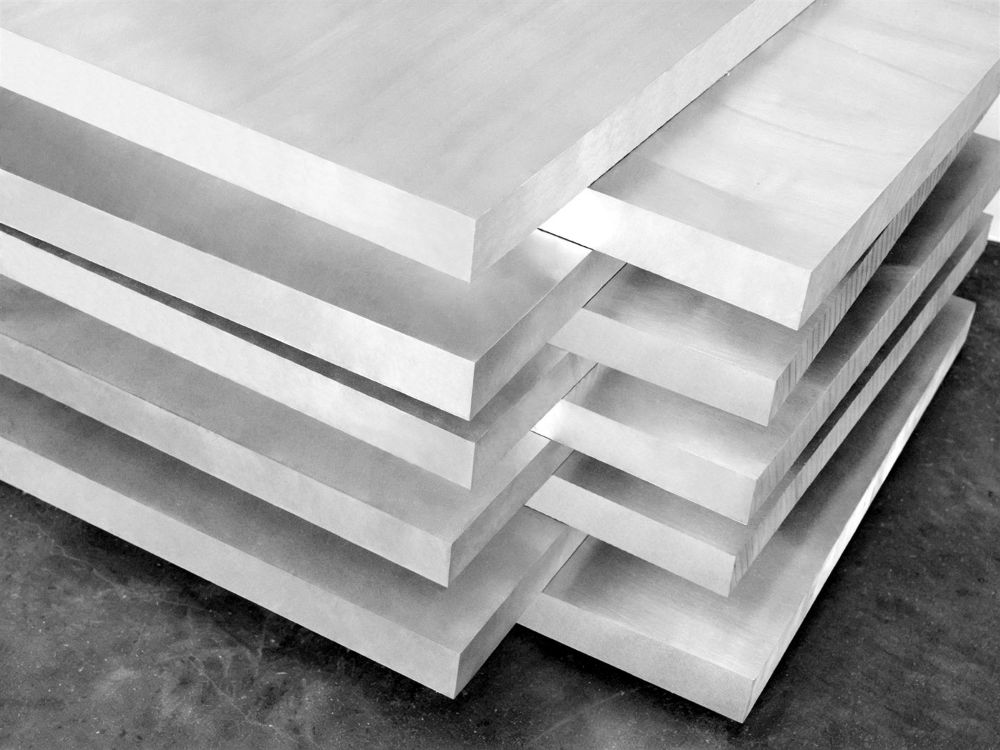
Magnesium plates prepared as starting stock for CNC-machined parts.
For example, a large machined plate and a thin-wall electronic housing may need different stock, fixturing, toolpaths, and inspection plans.
Material condition also matters. Residual stress in the stock can contribute to movement as material is removed. Balanced roughing, controlled stock allowance, stable workholding, and inspection between operations may be necessary for dimensionally sensitive parts.
Chip and dust control are especially important when machining magnesium. Production should be handled by a qualified shop with suitable equipment, housekeeping, storage, and fire-safety procedures for combustible metal.
If you are planning a magnesium component, review our magnesium CNC machining capabilities and the practical guide to AZ31B magnesium plate.
For projects that begin with flat stock, magnesium plate can provide a direct starting point for housings, tooling plates, fixtures, covers, and structural parts.
You can also learn how upstream material control affects later operations in our guide to the magnesium alloy production process.
How to Choose a CNC Machining Supplier
Do not choose a supplier from a machine list alone. Ask whether the shop understands your material, geometry, critical tolerances, inspection needs, and production quantity.
A capable supplier should be able to discuss:
- The best starting stock for the part
- Machining access and setup count
- Features that create unnecessary cost
- Workholding for thin or flexible areas
- Tolerance and inspection strategy
- Surface protection and secondary processing
- Prototype-to-production planning
- Material certificates and traceability when required
For magnesium work, the supplier should also have a clear process for chip management and combustible-metal safety.
What Should You Include in a CNC Machining RFQ?
A complete request for quotation helps the supplier quote faster and reduces assumptions.
Include the following information when possible:
- A STEP, Parasolid, or other usable 3D model
- A controlled 2D drawing in PDF format
- Material alloy, temper, and product form
- Order quantity and expected repeat volume
- General and feature-specific tolerances
- Datums and GD&T requirements
- Threads, inserts, and assembly details
- Required surface finish
- Coating or corrosion-protection requirements
- Critical cosmetic surfaces
- Inspection reports or certificates required
- Packaging and delivery requirements
If the material is not final, explain how the part will be used. Load, temperature, corrosion exposure, weight target, and finish requirements can help the supplier recommend a practical magnesium alloy.
Frequently Asked Questions
What does CNC stand for?
CNC stands for Computer Numerical Control. It means a machine uses programmed instructions to control movement and manufacturing operations.
Is CNC a machine or a process?
CNC is a method of controlling equipment. The term is also commonly used to describe CNC machining, CNC milling, CNC turning, and the machines used for those processes.
What is the difference between CNC machining and 3D printing?
CNC machining is usually subtractive: it removes material from stock. Most 3D-printing processes are additive: they build a part layer by layer.
The better option depends on the material, geometry, tolerance, surface finish, quantity, and end use.
Is a 5-axis CNC machine always more accurate?
No. Axis count describes machine movement, not guaranteed accuracy. Machine condition, setup, tooling, programming, temperature, material behavior, and inspection all affect the finished part.
Can CNC machines cut materials other than metal?
Yes. CNC equipment can process plastics, composites, wood, foam, graphite, and other materials when the machine, tools, and controls are suitable.
Is magnesium difficult to machine?
Magnesium alloys generally machine well, but the supplier must control the material, fixturing, distortion risk, chips, dust, and fire safety. The correct process depends on the alloy and part design.
What files are needed for a CNC quote?
A 3D model and a controlled 2D drawing are the best starting point. The drawing should define tolerances, threads, surface finish, material, and inspection requirements that cannot be communicated by geometry alone.
Final Takeaway
CNC means Computer Numerical Control, but successful CNC machining requires more than sending a model to a machine.
The best results come from matching the design, material, stock, machine, tooling, setup, and inspection plan. Buyers can reduce cost and lead time by sharing complete files and identifying the features that truly matter.
Miji Magnesium supplies magnesium materials and supports CNC-machined magnesium components for industrial applications. If you have a drawing or an early-stage design, send us your project details for a material and manufacturing review.