




- 1. 1. Magnesium Production Starts with Raw Material Control
- 2. 2. Melting and Casting Affect Everything That Comes Later
- 3. 3. Rolling and Extrusion Can Create Residual Stress
- 4. 4. Heat Treatment Should Match the Final Manufacturing Route
- 5. 5. CNC Machining Often Reveals Material Problems
- 6. 6. What Buyers Should Include in a Magnesium RFQ
- 7. 7. How to Choose a Magnesium Alloy Supplier
- 8. FAQ
- 8.1.
- 8.2. Why can two batches of the same magnesium grade machine differently?
- 8.3. Is magnesium difficult to CNC machine?
- 8.4. When should stress-relieved or annealed material be considered?
- 8.5. Is alloy grade enough for a custom magnesium part?
- 9. Final Thoughts
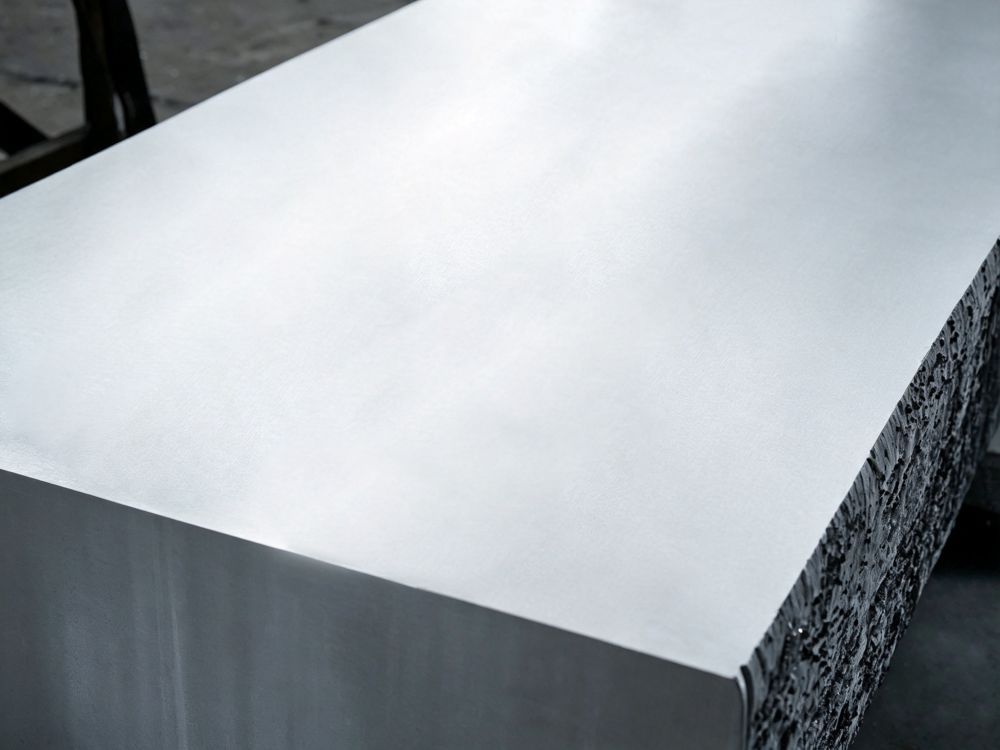
Choosing a magnesium alloy usually starts with a grade.
AZ31B is common for plate and sheet. AZ61A and AZ80 are often used for higher-strength wrought applications. AZ91D is widely used for cast parts, while WE43 may be considered when higher-temperature performance is important.
But the alloy name is only part of the decision.
Two pieces of magnesium with the same grade can behave differently during machining. One plate may stay flat after rough milling, while another starts to bow after material is removed from one side.
When that happens, chemistry is not the only factor.
Casting quality, rolling history, extrusion conditions, heat treatment, straightening, residual stress, and incoming stock condition can all affect how the material performs.
For buyers, this is why the magnesium alloy production process matters just as much as the grade written on the drawing.
1. Magnesium Production Starts with Raw Material Control
Good magnesium starts before the furnace.
Virgin magnesium, alloying elements, and approved return material need to be identified and controlled properly. Moisture, surface contamination, oxidation, and mixed scrap can affect melt quality and create problems later in production.
A buyer does not need to specify every detail of furnace preparation.
What matters is whether the supplier has a repeatable process for controlling incoming materials.
Alloy selection should also match the final part.
Before choosing a grade, ask:
- Will the part be heavily CNC machined?
- Is it a rolled plate, casting, extrusion, or formed sheet?
- Does it need high strength or better dimensional stability?
- Will it face heat, moisture, or corrosion?
- Does it require welding or secondary forming?
A thin formed bracket and a large CNC-machined plate may both use magnesium, but they do not need the same material condition.
2. Melting and Casting Affect Everything That Comes Later
Magnesium melting is not just about reaching the correct temperature.
Charge cleanliness, moisture control, melt protection, alloy additions, holding time, dross removal, transfer, and pouring all influence the quality of the metal.
Some melt-related defects are not obvious until machining begins.
For example, inclusions may only become visible after the surface is cut. Porosity can appear after a machining pass removes the outer material.
When defects show up on a CNC machine, the machining process is not always the cause.
Sometimes the cutter is simply exposing problems that already existed inside the stock.
Casting is equally important.
When molten magnesium solidifies, its first grain structure is formed. Porosity, segregation, and inclusions may also develop during this stage.
Later rolling, extrusion, forging, or heat treatment can improve the structure, but they cannot completely remove every defect created during casting.
That is why the quality of the original billet or slab still matters even when the buyer is purchasing finished plate or extrusion.
3. Rolling and Extrusion Can Create Residual Stress
For buyers purchasing magnesium plate or extruded profiles, dimensional tolerance is only part of the story.
Residual stress is often more important for heavily machined parts.
During rolling or extrusion, the material goes through deformation, heating, cooling, and sometimes straightening. These operations can leave internal stresses inside the stock.
While the plate or profile remains untouched, those stresses may stay balanced.
Once CNC machining removes a large amount of material from one side, the balance changes.
The part may begin to bow, twist, or dish after it is released from the fixture.
This is why two batches of the same alloy can machine differently.
If one AZ31B plate stays flat and another moves during roughing, I would not immediately assume the chemistry is wrong.
I would also look at:
- Rolling history
- Annealing condition
- Straightening method
- Incoming flatness
- Material thickness
- Amount of stock removal
For large or heavily pocketed components, discussing material condition before machining can prevent unnecessary scrap.
4. Heat Treatment Should Match the Final Manufacturing Route
Heat treatment changes how magnesium behaves.
Cold working can increase strength while reducing ductility, depending on the alloy and condition.
Annealing can help reduce internal stress and improve formability.
But there is no single heat-treatment condition that is best for every part.
A plate that will be heavily machined from both sides may need good dimensional stability.
A formed component may need more ductility.
A part that requires strength after forming may need a different production route again.
The important question is not simply:
“What heat treatment does this alloy normally use?”
A better question is:
“What condition works best for the way this part will actually be manufactured?”
That is a much more useful discussion between the buyer, material supplier, and machine shop.
5. CNC Machining Often Reveals Material Problems
Magnesium is generally easy to machine.
Cutting forces are relatively low, and good-quality stock can be milled, turned, drilled, and tapped efficiently.
However, easy cutting does not mean every magnesium part is easy to manufacture.
Large plates, thin walls, deep pockets, and asymmetric material removal can create distortion problems.
A plate with residual stress may stay flat while clamped and move after it is released.
An extrusion may shift as material is removed unevenly.
A casting may reveal porosity only after the first machining pass.
Machining strategy still matters.
Tooling, workholding, chip control, cutting sequence, and heat management all affect the final result.
But when a part moves unexpectedly, both the incoming material and the machining process should be reviewed.
Blaming only the CNC machine or only the material usually misses part of the problem.
6. What Buyers Should Include in a Magnesium RFQ
A simple request such as:
“Please quote AZ31B magnesium plate”
may be enough for a standard stock order.
For a custom part, it usually is not.
A better RFQ should include:
- Alloy grade
- Product form
- Material condition
- Starting size
- Final dimensions
- Critical tolerances
- Flatness requirements
- Approximate stock removal
- Surface finish
- Coating or surface treatment
- Inspection requirements
- Quantity
For CNC-machined parts, the drawing and 3D model are especially useful.
They help the supplier understand whether the part has deep pockets, thin walls, large flat surfaces, or features that may create distortion during machining.
For example, a simple AZ31B plate and a large AZ31B plate with deep one-sided pockets are very different manufacturing jobs.
The alloy may be the same.
The production risk is not.
7. How to Choose a Magnesium Alloy Supplier
A capable magnesium supplier should be able to discuss more than available grades and stock sizes.
For custom work, ask questions such as:
- How is the material produced before shipment?
- What material condition is recommended for heavy machining?
- How is flatness controlled?
- Can the supplier support custom plate, extrusion, or CNC machining?
- What inspection documents are available?
- How are repeat production lots controlled?
A supplier that understands the finished drawing can usually provide more useful feedback than one that only sees the alloy name.
At Miji Magnesium, custom projects can be reviewed around the actual component rather than only the raw material requirement.
This is especially useful for magnesium plate, extrusion, bar, tube, and CNC-machined parts where material condition and downstream processing affect the final result.
FAQ
Why can two batches of the same magnesium grade machine differently?
The reason may not be chemistry.
Rolling history, heat treatment, straightening, residual stress, incoming stock condition, and machining setup can all affect how the part behaves.
Is magnesium difficult to CNC machine?
Magnesium generally has good machinability.
The bigger challenges are often part distortion, thin-wall stability, workholding, chip management, and maintaining dimensional accuracy after the part is released from the fixture.
When should stress-relieved or annealed material be considered?
It is worth discussing for parts with heavy material removal, large flat surfaces, thin walls, tight flatness requirements, or machining on multiple sides.
Is alloy grade enough for a custom magnesium part?
Not always.
For precision parts, the material form, condition, manufacturing history, geometry, machining route, and inspection requirements can be equally important.
Final Thoughts
A magnesium alloy grade tells you what the material is.
It does not tell you everything about how that material will behave during manufacturing.
A plate can meet the chemical specification and still move during machining.
An extrusion can meet dimensional tolerance and still contain residual stress.
A CNC-machined part can reveal defects that began much earlier during melting, casting, rolling, or heat treatment.
For buyers, the best approach is to connect material selection with the final manufacturing process.